


Damaged oil and gas well casing can sometimes be reused, but only after professional repair and strict integrity testing. Minor defects such as localized corrosion or small leaks can be repaired using methods like casing patching or chemical sealing. However, severe damage—such as major deformation, cracking, or excessive wall loss—requires replacement. Proper evaluation and repair are critical to ensure well safety, pressure integrity, and environmental protection.
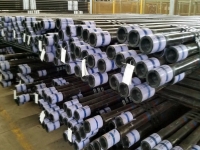
The usability of damaged casing depends on damage type, severity, and operating conditions.
Minor corrosion or localized perforation
Small leaks or micro-cracks
Repairable thread or sealing issues
Passing hydrostatic and non-destructive testing after repair
In these cases, repair can restore pressure-bearing capacity and well integrity.
Severe deformation, collapse, or misalignment
Through-wall cracks or large perforations
Wall thickness loss >12.5% of design value
Irreparable thread damage or connection failure
These conditions compromise structural safety and cannot meet operational standards.
Continuing to operate with damaged casing may lead to:
Wellbore blockage – restricting downhole tool movement
Production decline – inefficient fluid extraction
Well control incidents – risk of leakage or blowout
Environmental contamination – groundwater or surface pollution
Well abandonment – severe economic losses
Immediate inspection and intervention are mandatory once damage is detected.
Understanding failure mechanisms helps guide repair decisions:
Corrosion perforation: H₂S, CO₂, high-salinity formation water
Deformation/collapse: formation pressure, salt layer creep
Misalignment: geological movement, seismic activity
Thread leakage: improper make-up torque or seal failure
Wear damage: long-term drill string friction
Casing should be repaired or replaced if:
Visible cracks, deformation, or leakage are present
Wall thinning significantly affects strength
Hydrostatic or NDT tests (UT/EMI) fail
Operating conditions involve high pressure, high temperature, or corrosive media
Repair solutions vary depending on damage depth and severity:
Applicable: Near wellhead corrosion or rupture
Methods:
Cut-and-replace damaged section
Clamp + resin sealing
Result: Fast recovery without full well intervention
Applicable: Leakage or localized damage
Technology:
Targeted casing removal and replacement
Precision decoupling tools
Advantage: Reduced repair time and cost
Applicable: Deep deformation or misalignment
Method:
Milling damaged section
Running new casing string
Cementing for reinforcement
Note: Complex but effective for deep wells
Applicable: Micro-cracks and corrosion holes
Features:
High-strength resin injection
Pressure resistance >45 MPa
No reduction in internal diameter
Applicable: Local perforations or cracks
Principle:
Install internal metal liner
Expand hydraulically for sealing
Trend:
Real-time detection + repair
High-precision sensors
Improved efficiency and reduced downtime
Before reuse, repaired casing must meet:
Hydrostatic pressure test passed (no leakage)
Full bore access (tool passage unobstructed)
Restored structural integrity
Equivalent corrosion resistance to original casing
Damaged oil and gas casing is not automatically scrapped. With proper diagnosis and advanced repair technologies, many types of damage can be effectively restored. However, safety remains the priority—severely damaged casing must be replaced to avoid operational risks and environmental hazards.
1. Can all damaged casing be repaired?
No. Only minor or localized damage can be repaired. Severe structural damage requires replacement.
2. What is the most common casing repair method?
Casing patching and chemical sealing are widely used for localized damage.
3. How is casing integrity verified after repair?
Through hydrostatic testing and non-destructive testing such as ultrasonic inspection.
4. What happens if damaged casing is not repaired?
It can lead to leaks, blowouts, production loss, and environmental damage.
5. Is casing repair cost-effective?
Yes, repairing casing is often much cheaper than full replacement or well abandonment.


