


Pipe reducers are indispensable fittings in industrial piping systems, allowing pipelines of different diameters to be connected smoothly while maintaining stable flow characteristics. The two most common designs are concentric reducers and eccentric reducers. Although both reduce pipe size, their structural differences directly affect fluid flow, equipment protection, drainage performance, and installation methods.
Selecting the correct reducer is essential for preventing issues such as cavitation, air pockets, condensate accumulation, and excessive pressure loss. This guide explains the differences between concentric and eccentric reducers, their typical applications, and how to choose the right one for your piping system.
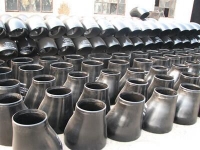
The primary distinction is the alignment of the pipe centerline.
|
Feature |
Concentric Reducer |
Eccentric Reducer |
|
Centerline |
Aligned |
Offset |
|
Shape |
Symmetrical cone |
One flat side with an offset transition |
|
Flow Path |
Uniform and centered |
Offset to maintain either top or bottom alignment |
|
Typical Use |
Vertical pipelines and pump discharge |
Pump suction and horizontal pipelines |
A concentric reducer maintains a common centerline, creating a symmetrical transition between two pipe sizes. In contrast, an eccentric reducer offsets one side of the pipe, allowing either the top or bottom of the pipeline to remain level depending on installation requirements.
Concentric reducers provide a smooth and balanced flow transition, making them ideal for applications where fluid distribution should remain symmetrical.
Vertical Piping Systems
Concentric reducers are most commonly installed in vertical pipelines because gravity prevents air or liquid from collecting inside the fitting. They are widely used in:
Boiler piping
Chemical processing towers
Water supply risers
Industrial process piping
Pump Discharge Lines
On the discharge side of centrifugal pumps, concentric reducers help create a more uniform flow pattern, improving pressure recovery and reducing flow disturbance.
Gas and Steam Pipelines
In many gas or steam systems, concentric reducers provide stable flow while minimizing unnecessary turbulence and pressure loss.
Instrument Connections
Flow meters, control valves, and other sensitive equipment often benefit from the smooth flow transition provided by concentric reducers, improving measurement accuracy and system performance.
Eccentric reducers are designed to eliminate air pockets or liquid accumulation by keeping either the top or bottom of the pipeline level.
Pump Suction Lines (Most Critical Application)
The most important use of an eccentric reducer is on the horizontal suction side of centrifugal pumps.
The reducer should always be installed Flat On Top (FOT).
This configuration prevents air from becoming trapped inside the reducer. Eliminating trapped gas reduces the risk of pump cavitation, protects the impeller, and improves pump efficiency and service life.
Horizontal Liquid Pipelines
For liquid transportation systems, eccentric reducers are generally installed Flat On Bottom (FOB).
This arrangement allows liquids to drain completely while preventing sediment or debris from collecting at the pipe transition.
Horizontal Gas or Steam Pipelines
Steam systems naturally generate condensate during operation. Installing an eccentric reducer Flat On Top (FOT) minimizes condensate accumulation, helping reduce water hammer, corrosion, and maintenance issues.
Pipe Rack Installations
In horizontal pipe rack systems, bottom-flat eccentric reducers maintain a constant Bottom of Pipe (BOP) elevation. This simplifies support design and allows pipes of different diameters to share the same support elevation.
Proper installation direction is just as important as selecting the correct reducer type.
|
Installation |
Meaning |
Typical Application |
|
FOT (Flat On Top) |
Flat side positioned on top |
Pump suction, gas pipelines, steam systems |
|
FOB (Flat On Bottom) |
Flat side positioned on bottom |
Liquid pipelines, pipe rack systems |
Incorrect installation can lead to trapped air, poor drainage, increased vibration, cavitation, or water hammer.
The following recommendations can help engineers quickly select the appropriate reducer.
|
Application |
Recommended Reducer |
Installation |
|
Vertical pipelines |
Concentric Reducer |
Standard installation |
|
Pump discharge |
Concentric Reducer |
Standard installation |
|
Pump suction (horizontal) |
Eccentric Reducer |
Flat On Top (FOT) |
|
Horizontal liquid pipelines |
Eccentric Reducer |
Flat On Bottom (FOB) |
|
Horizontal steam pipelines |
Eccentric Reducer |
Flat On Top (FOT) |
|
Pipe rack systems |
Eccentric Reducer |
Flat On Bottom (FOB) |
When specifying a pipe reducer, it is recommended to provide the following information:
Reducer type (Concentric or Eccentric)
Pipe sizes (e.g., 8" × 6")
Wall thickness (SCH 40, SCH 80, etc.)
Material grade (ASTM A234 WPB, ASTM A403 WP304, WP316, etc.)
Applicable standard (ASME B16.9, MSS SP-75, etc.)
Providing complete specifications helps manufacturers supply fittings that meet both dimensional and performance requirements.
Although concentric and eccentric reducers perform the same basic function of connecting different pipe sizes, they serve very different purposes in piping design. Concentric reducers are ideal for vertical installations and pump discharge lines where balanced flow is required, while eccentric reducers are essential for pump suction lines and horizontal piping to eliminate air pockets, improve drainage, and maintain stable system operation. Understanding the differences between FOT and FOB installation further ensures reliable performance, longer equipment life, and safer industrial piping systems.
1. What is the main difference between concentric and eccentric reducers?
A concentric reducer has aligned centerlines, while an eccentric reducer has offset centerlines with one flat side.
2. Why are eccentric reducers used on pump suction lines?
They prevent air accumulation that can cause pump cavitation and reduce pump efficiency.
3. What does FOT mean?
FOT stands for Flat On Top, commonly used for pump suction and horizontal gas or steam pipelines.
4. What does FOB mean?
FOB stands for Flat On Bottom, typically used for liquid pipelines and pipe rack installations.
5. Which standard covers concentric and eccentric reducers?
Most butt-weld reducers are manufactured according to ASME B16.9, with material specifications selected based on the application.


