


Selecting the correct steel pipe dimensions is one of the most important steps in pipeline design and procurement. Misunderstanding pipe size terminology can result in incompatible components, installation delays, and unnecessary costs. Because steel pipe dimensions involve several parameters—including outside diameter (OD), wall thickness (WT), nominal size, and schedule—many buyers find them confusing, especially when comparing carbon steel and stainless steel pipes.
This guide explains how steel pipe sizes are defined, the differences between ASME B36.10 and ASME B36.19 standards, and how Schedule, NPS, DN, and weight classifications are used in real-world engineering projects.
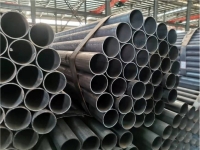
A complete pipe specification normally includes three key parameters:
Outside Diameter (OD) – The actual external diameter of the pipe.
Wall Thickness (WT) – Determines pressure capacity and pipe strength.
Pipe Length – Common commercial lengths include 6 m (20 ft) and 12 m (40 ft), as well as SRL and DRL options.
These three values determine:
Pipe weight
Internal diameter (ID)
Pressure rating
Material consumption
Transportation and project costs
Providing all three parameters helps ensure the correct product is supplied.
Steel pipe dimensions are standardized internationally to ensure compatibility between pipes, fittings, and flanges.
ASME B36.10M
ASME B36.10M covers the dimensions of carbon steel and alloy steel pipes, including both seamless and welded products used in pressure piping, structural applications, and fluid transportation.
For pipe sizes up to NPS 12 (DN 300), the actual outside diameter is larger than the nominal pipe size. Above NPS 12, the nominal size and outside diameter become nearly identical.
ASME B36.19M
ASME B36.19M specifies dimensions for stainless steel pipes.
Most dimensions are similar to ASME B36.10M, but stainless steel schedules use the "S" designation, such as:
Schedule 5S
Schedule 10S
Schedule 40S
Schedule 80S
For larger sizes (generally NPS 10 and above), Schedule 40S and 80S have different wall thicknesses from their carbon steel counterparts, making the "S" suffix essential when ordering stainless steel pipe.
A pipe schedule represents wall thickness rather than pipe diameter. Pipes with the same outside diameter can have different schedules, resulting in different pressure ratings.
Common schedules include:
SCH 5 / 5S
SCH 10 / 10S
SCH 20
SCH 30
SCH 40 / 40S
SCH 80 / 80S
SCH 120
SCH 160
As the schedule number increases, wall thickness also increases, improving the pipe's ability to withstand higher internal pressure.
NPS (Nominal Pipe Size)
NPS is the North American sizing system expressed in inches. It represents a nominal designation rather than the actual measured diameter.
Example:
NPS 2
NPS 4
NPS 10
NPS is typically combined with a schedule number when specifying a pipe.
DN (Nominal Diameter)
DN is the international metric equivalent, expressed in millimeters.
Typical conversions include:
|
DN |
NPS |
|
DN15 |
1/2" |
|
DN20 |
3/4" |
|
DN25 |
1" |
|
DN50 |
2" |
|
DN100 |
4" |
|
DN200 |
8" |
For larger sizes, DN is approximately equal to 25 × NPS, although exact conversions should always follow applicable standards.
Pipe Weight Class (STD, XS, XXS)
Before schedule numbers became widely adopted, pipe wall thickness was commonly identified using weight classes:
STD – Standard Weight
XS – Extra Strong
XXS – Double Extra Strong
Although Schedule numbers are now more common, these designations are still referenced in many engineering specifications and maintenance documents.
To avoid ordering errors, steel pipes are commonly described using one of the following formats:
Outside Diameter × Wall Thickness
Example: 114.3 × 6.02 mm
NPS × Schedule
Example: NPS 4 × SCH 40
NPS × Weight Class
Example: NPS 4 × STD
Outside Diameter × Weight
Example: OD 3.5 in × 16.8 lb/ft
Including material grade, manufacturing standard, and required length further improves specification accuracy and helps suppliers deliver the correct product.
Understanding steel pipe dimensions goes beyond simply knowing the outside diameter. Engineers and buyers must also consider wall thickness, schedule designation, nominal size, applicable standards, and weight classifications when selecting pipes for industrial projects.
Whether ordering carbon steel or stainless steel pipe, using the correct ASME standard and expressing dimensions accurately can reduce procurement errors, improve installation efficiency, and ensure long-term pipeline performance.
1. What information is required to specify a steel pipe?
Typically, you should specify the outside diameter (or NPS/DN), wall thickness or schedule, material grade, manufacturing standard, and pipe length.
2. What is the difference between Schedule 40 and Schedule 40S?
Schedule 40 is generally used for carbon steel pipes under ASME B36.10M, while Schedule 40S applies to stainless steel pipes under ASME B36.19M.
3. Is NPS the same as the actual pipe diameter?
No. NPS is a nominal designation. For many sizes, especially NPS 12 and below, the actual outside diameter differs from the nominal size.
4. What do STD, XS, and XXS mean?
They are traditional pipe weight classes representing Standard, Extra Strong, and Double Extra Strong wall thicknesses.
5. Which standard applies to stainless steel pipe dimensions?
Stainless steel pipe dimensions are specified by ASME B36.19M, while carbon steel pipe dimensions generally follow ASME B36.10M.


