


Seamless steel pipe marking is the process of adding key identification details—such as size, grade, standard, and batch number—to ensure traceability and quality control. Common methods include inkjet, laser, and mechanical marking. Inkjet is widely used for efficiency, while laser marking offers the highest durability for harsh environments.
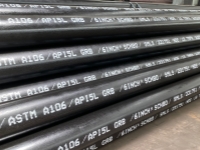
Seamless steel pipe marking refers to the process of applying identification information onto the pipe surface through spraying, engraving, or mechanical printing.
This marking ensures that each pipe can be tracked, identified, and verified throughout its lifecycle—from manufacturing to installation and service.
Seamless steel pipes are widely used in oil & gas, chemical processing, power generation, and mechanical engineering, where safety and reliability are critical.
Core Functions of Pipe Marking:
Traceability: Track production batch, raw materials, and manufacturing process
Quality Control: Verify compliance with standards and specifications
Safety Management: Enable rapid fault diagnosis in case of leakage or failure
Accountability: Provide evidence for root cause analysis and responsibility determination
In failure scenarios (e.g., leakage, cracking), marking data allows engineers to quickly trace:
Production batch
Furnace number
Material origin
Process parameters
Typical SMLS pipe marking content includes:
Manufacturer name or trademark
Production date / batch number / heat number
Pipe size (OD × wall thickness)
Material grade (e.g., A106 Gr.B, A333 Gr.6)
Applicable standard (e.g., ASTM A106)
Quality grade or pressure rating
Definition:
A non-contact method that sprays ink onto the pipe surface to form text, symbols, or codes.
Technical Types:
Inkjet printing (multi-color, flexible layout)
Spray marking (single-color, large characters)
Advantages:
High speed → suitable for mass production
Flexible content (text, barcode, QR code)
Moderate cost and easy operation
Limitations:
Lower durability vs. laser marking
May fade in corrosive or abrasive environments
Requires relatively clean surface
Definition:
Uses a high-energy laser beam to create permanent markings by altering the pipe surface.
Working Principle:
Laser energy causes oxidation or vaporization, forming durable engraved marks.
Advantages:
Permanent, wear-resistant, corrosion-resistant
High precision (small fonts, QR codes, complex graphics)
No consumables (eco-friendly)
Limitations:
Higher equipment investment
Requires skilled operation
Slightly lower speed than inkjet
Definition:
A contact-based method that presses or rolls characters onto the pipe surface.
Common Types:
Rotary printing (most common)
Chain/box type printing
Advantages:
Low cost
Simple structure and maintenance
Clear and readable markings
Limitations:
Limited flexibility (no colors or complex graphics)
May leave indentations on pipe surface
Time-consuming to change marking content
Selection Guidelines:
Inkjet Marking → Best for high efficiency + moderate durability
Laser Marking → Best for harsh environments + permanent traceability
Mechanical Printing → Best for low budget + simple marking needs
Decision Factors:
Application environment (corrosive / outdoor / offshore)
Production scale (mass vs. small batch)
Marking durability requirements
Budget and automation level
Seamless steel pipe marking is a critical process for product identification and lifecycle traceability.
Among the three mainstream methods:
Inkjet → flexible and cost-effective
Laser → durable and high-end
Mechanical → economical and traditional
The ultimate goal remains the same:
Ensure markings are clear, durable, and traceable under real service conditions.
Q1: What is the most common marking method for seamless steel pipes?
A: Inkjet marking is the most widely used due to its speed, flexibility, and cost efficiency.
Q2: Which marking method is most durable?
A: Laser marking provides permanent, wear-resistant, and corrosion-resistant identification.
Q3: Can pipe marking include QR codes or barcodes?
A: Yes, both inkjet and laser marking systems support barcodes and QR codes.
Q4: Does marking affect pipe performance?
A: Non-contact methods (inkjet, laser) do not affect performance; mechanical marking may cause slight surface indentation.


