


What Is Schedule 80 Steel Pipe?
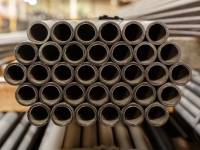
Schedule 80 steel pipe is a heavy-wall carbon steel pipe designed for high-pressure and high-temperature applications. Compared with lower schedules, it features a significantly thicker wall, which provides higher mechanical strength, improved durability, and better resistance to internal pressure and external impact.
Because of these characteristics, Schedule 80 pipes are widely specified in industrial processing, chemical plants, oil & gas systems, and heavy-duty construction projects where safety and performance are critical.
What Does “Schedule 80” Mean?
The term “Schedule” (Sch) is defined under ASME B36.10, which standardizes steel pipe dimensions based on wall thickness, not material grade.
The marking “Sch 80” indicates a pipe with a thicker wall than Schedule 40 of the same nominal pipe size (NPS).
As schedule number increases, wall thickness increases, while outside diameter remains constant.
Thicker walls result in higher pressure ratings and improved structural strength.
Why Inside Diameter Matters
Most steel pipes are used for transporting fluids and gases, making the inside diameter (ID) a key design factor.
For the same nominal size, Schedule 80 pipes have a smaller inside diameter than lower-schedule pipes.
This reduced ID is a trade-off for higher pressure capacity and mechanical strength.
Engineers select Schedule 80 when strength and safety outweigh flow volume requirements.
Key Advantages of Schedule 80 Steel Pipe
Thicker wall for high-pressure systems
Better performance in high-temperature environments
Increased resistance to mechanical stress and vibration
Suitable for exposed piping and visible installations
Longer service life in demanding conditions
Schedule 80 Steel Pipe Dimensions in mm
|
Nominal size [inches] |
Outside diameter [inches] |
Outside diameter [mm] |
Wall thickness [inches] |
Wall thickness [mm] |
Weight [lb/ft] |
Weight [kg/m] |
|
1/2 |
0.840 |
21.3 |
0.083 |
2.11 |
0.68 |
1.00 |
|
3/4 |
1.050 |
26.7 |
0.083 |
2.11 |
0.87 |
1.29 |
|
1 |
1.315 |
33.4 |
0.109 |
2.77 |
1.41 |
2.11 |
|
1 1/4 |
1.660 |
42.2 |
0.109 |
2.77 |
1.82 |
2.71 |
|
1 1/2 |
1.900 |
48.3 |
0.109 |
2.77 |
2.1 |
3.13 |
|
2 |
2.375 |
60.3 |
0.109 |
2.77 |
2.66 |
3.96 |
|
2 1/2 |
2.875 |
73.0 |
0.120 |
3.05 |
3.56 |
5.29 |
|
3 |
3.500 |
88.9 |
0.120 |
3.05 |
4.37 |
6.50 |
|
3 1/2 |
4.000 |
101.6 |
0.120 |
3.05 |
5.01 |
7.46 |
|
4 |
4.500 |
114.3 |
0.120 |
3.05 |
5.66 |
8.42 |
|
5 |
5.563 |
141.3 |
0.134 |
3.40 |
7.82 |
11.64 |
|
6 |
6.625 |
168.3 |
0.134 |
3.40 |
9.35 |
13.91 |
|
8 |
8.625 |
219.1 |
0.148 |
3.76 |
13.50 |
20.10 |
|
10 |
10.750 |
273.1 |
0.165 |
4.19 |
18.79 |
27.96 |
|
12 |
12.750 |
323.9 |
0.180 |
4.57 |
24.34 |
36.22 |
|
14 |
14.000 |
355.6 |
0.188 |
4.78 |
27.97 |
41.62 |
|
16 |
16.000 |
406.4 |
0.188 |
4.78 |
32.02 |
47.65 |
|
18 |
18.000 |
457.0 |
0.188 |
4.78 |
36.05 |
53.65 |
|
20 |
20.000 |
508.0 |
0.218 |
5.54 |
46.42 |
69.09 |
|
22 |
22.000 |
559.0 |
0.218 |
5.54 |
51.14 |
76.10 |
|
24 |
24.000 |
610.0 |
0.250 |
6.35 |
63.93 |
95.13 |
|
30 |
30.000 |
762.0 |
0.312 |
7.92 |
99.60 |
148.22 |
FAQ 1:What does Schedule 80 pipe mean?
Schedule 80 pipe refers to a pipe with a thicker wall than Schedule 40, providing higher pressure-bearing capacity while keeping the same outer diameter (OD).
FAQ 2:Are Schedule 80 pipe dimensions available in millimeters?
Yes. Although Schedule 80 is based on inch standards (ANSI/ASME), its outer diameter, wall thickness, and inner diameter are commonly converted and specified in millimeters for international engineering use.
FAQ 3:Does Schedule 80 pipe have the same outer diameter as Schedule 40?
Yes. For the same nominal pipe size (NPS), Schedule 80 and Schedule 40 pipes share the same outer diameter; the difference lies in wall thickness and inner diameter.
FAQ 4:Why is Schedule 80 pipe thicker than Schedule 40?
Schedule 80 pipes have increased wall thickness to withstand higher internal pressure, making them suitable for high-pressure, high-temperature, or demanding industrial applications.
FAQ 5:Where are Schedule 80 pipe dimensions in mm commonly used?
Schedule 80 pipe dimensions in millimeters are widely used in oil & gas, chemical processing, power plants, pressure systems, and international EPC projects.


