


A36 steel is a low-carbon structural steel manufactured according to the ASTM A36 specification. It is one of the most widely used steel grades for construction, fabrication, and industrial applications because of its excellent weldability, good machinability, reliable strength, and cost-effectiveness.
A36 steel is commonly supplied in the form of steel plates, flat bars, angles, channels, beams, and other structural sections.
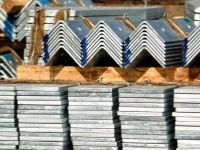
A36 steel offers a practical balance between mechanical performance and affordability, making it a preferred material for engineers, fabricators, and contractors worldwide.
|
Property |
Benefit |
|
Excellent Weldability |
Easy fabrication and assembly |
|
Good Machinability |
Suitable for cutting, drilling, and machining |
|
Reliable Structural Strength |
Supports load-bearing applications |
|
Good Ductility |
Easy forming and shaping |
|
Cost-Effective |
Reduces overall project costs |
|
Wide Availability |
Easily sourced for most projects |
ASTM A36 is classified as a low-carbon structural steel that provides:
Good strength-to-cost ratio
Excellent weldability without complex procedures
Good formability and fabrication performance
Reliable toughness for general structural use
Compatibility with common welding methods
Because of these characteristics, A36 steel is often selected for projects that require dependable structural performance without the higher cost of alloy steels.
A36 steel is used across a wide range of industries and structural projects, including:
Construction and Infrastructure
Building structures
Steel frames
Bridges
Platforms and walkways
Support columns
Manufacturing and Fabrication
Industrial equipment
Machinery components
Fabricated steel structures
Material handling systems
Energy and Industrial Projects
Storage tanks
Equipment supports
Power plant structures
General industrial fabrication
Transportation
Trailer frames
Vehicle structures
Railway support components
A36 steel is commonly supplied as:
A36 Steel Plate
A36 Flat Bar
A36 Angle Bar
A36 Channel Steel
A36 H Beam
A36 I Beam
A36 Structural Sections
Its versatility allows it to be used in both simple fabrication projects and large-scale structural engineering applications.
For many structural applications, A36 steel provides an ideal combination of:
Strength
Fabrication flexibility
Material availability
Cost efficiency
Long-term reliability
As global infrastructure, manufacturing, and industrial development continue to grow, ASTM A36 remains one of the most trusted and widely specified structural steel grades.
1. What is A36 steel?
A36 steel is a low-carbon structural steel produced according to ASTM A36 standards and widely used in construction, fabrication, and industrial applications.
2. What are the advantages of A36 steel?
A36 steel offers excellent weldability, good machinability, reliable strength, good formability, and cost-effective performance.
3. What is A36 steel used for?
A36 steel is commonly used for buildings, bridges, structural frames, machinery, storage tanks, equipment supports, and industrial fabrication projects.
4. Is A36 steel easy to weld?
Yes. A36 steel has excellent weldability and is compatible with common welding processes such as SMAW, MIG, TIG, and SAW.
5. Is A36 steel suitable for structural applications?
Yes. A36 steel is specifically designed for structural use and is one of the most widely used structural steel grades worldwide.


