


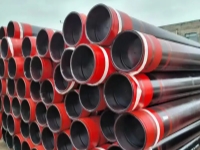
Choosing the right OCTG (Oil Country Tubular Goods) pipe is a critical engineering decision in oil and gas drilling and production. OCTG products—including casing, tubing, and drill pipe—must operate under extreme subsurface conditions such as high pressure, elevated temperature, and corrosive environments.
Incorrect selection can lead to well failure, production loss, and high maintenance costs. Therefore, OCTG pipe selection is always based on a combination of engineering design, reservoir conditions, and international standards such as API 5CT.
1. Well Depth and Formation Pressure
Well depth is one of the most important parameters in OCTG design.
Shallow wells require lower-grade casing with moderate collapse resistance
Deep wells require high-strength grades to withstand higher axial loads and external pressure
Ultra-deep wells demand premium grades with enhanced mechanical performance
As depth increases, casing and tubing must provide stronger collapse resistance and tensile strength to maintain well stability.
2. Operating Pressure and Temperature
Downhole pressure and temperature directly influence material performance.
High-pressure environments require higher yield strength grades (e.g., N80, P110)
High-temperature conditions demand stable mechanical properties and controlled chemical composition
Combined high-pressure/high-temperature (HPHT) wells require premium OCTG materials with strict quality control
Improper selection may lead to deformation, burst failure, or reduced service life.
3. Corrosive Media and Environmental Conditions
Corrosion is one of the most critical risks in oil and gas wells.
Common corrosive elements include:
Hydrogen sulfide (H₂S)
Carbon dioxide (CO₂)
Chloride ions in formation water
In sour service environments, standard carbon steel OCTG may not be sufficient. Engineers often select:
Corrosion-resistant alloys (CRA)
Sulfur-resistant grades (e.g., L80, 13Cr steel)
Enhanced coatings or inhibitors
Proper material selection significantly improves well integrity and reduces long-term operational risk.
4. OCTG Steel Grade Selection (API 5CT)
API 5CT defines commonly used casing and tubing grades, including:
J55 / K55: Shallow wells, low pressure applications
N80: Medium-depth wells, balanced strength and cost
P110: Deep wells, high-pressure environments
Each grade differs in yield strength and chemical composition, allowing engineers to match material performance with well conditions rather than overdesigning.
5. Thread Type and Connection Performance
Threaded connections are critical for maintaining sealing integrity in the wellbore.
Common OCTG thread types include:
API round threads (BTC, LTC, STC)
Premium connections for high-pressure and deviated wells
Selection depends on:
Torque requirements
Gas-tight sealing performance
Well deviation angle
Operational load conditions
A high-quality connection ensures leak-free performance and long-term reliability.
Beyond material selection, supplier capability plays a major role in overall project success.
A reliable OCTG supplier provides:
Strict quality control during manufacturing
Full traceability of raw materials and heat numbers
Compliance with API 5CT and ISO standards
Mechanical and chemical test certificates (MTC)
Non-destructive testing (NDT) reports
This ensures every pipe delivered meets the required safety and performance standards for critical oil and gas operations.
To guarantee reliability, OCTG pipes typically undergo:
Hydrostatic testing
Ultrasonic testing (UT)
Hardness testing
Tensile and impact testing
Dimensional inspection
Thread gauging and fit-up verification
These inspections ensure that each pipe meets strict industry requirements before deployment.
Q1: What is OCTG pipe?
A: OCTG (Oil Country Tubular Goods) includes casing, tubing, and drill pipe used for oil and gas drilling, completion, and production operations.
Q2: How do I choose the right OCTG grade?
A: Selection depends on well depth, operating pressure, temperature, corrosive conditions, and the applicable API 5CT requirements.
Q3: Which API grades are commonly used for OCTG pipes?
A: J55, K55, N80, L80, and P110 are among the most widely used API 5CT grades for different well conditions.
Q4: Why is supplier quality important for OCTG pipes?
A: A reliable supplier provides certified materials, full product traceability, comprehensive testing, and compliance with international standards, ensuring long-term well integrity and operational safety.


