


The best casing pipe material depends on downhole conditions.
Shallow & low-stress wells: K55
Medium-depth conventional wells: N80
Deep/high-pressure wells: P110 or Q125
CO₂ corrosive environments: 11Cr-110 or HP13Cr-110
Material selection must balance strength, toughness, corrosion resistance, and cost to maximize drilling efficiency and well lifespan.
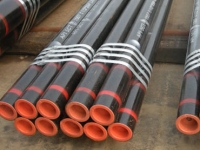
Casing pipe functions as the structural support and safety barrier of the wellbore. Its performance directly affects:
Drilling stability
Well integrity
Production lifecycle
Maintenance cost
Incorrect material selection can lead to collapse, corrosion failure, or premature well abandonment.
1. Mechanical Strength
Collapse resistance (external pressure)
Burst resistance (internal pressure)
Tensile strength (axial load)
2. Toughness & Fatigue Resistance
Critical for cyclic loads (fracturing, horizontal wells)
3. Corrosion Resistance
CO₂ corrosion (sweet corrosion)
H₂S corrosion (sour service)
4. Economic Efficiency
Avoid over-specification
Balance CAPEX vs lifecycle cost
|
Grade |
Strength Level |
Key Advantage |
Limitation |
Best Use |
|
K55 |
Low |
Good ductility, cost-effective |
Low impact toughness |
Shallow wells |
|
N80 |
Medium |
Balanced performance |
Moderate fatigue resistance |
Conventional wells |
|
P110 |
High |
High strength, widely used |
Poor corrosion resistance (CO₂/H₂S) |
Deep wells, fracturing |
|
Grade |
Corrosion Resistance |
Strength |
Cost |
Best Use |
|
13Cr-95 |
Moderate (CO₂) |
Medium |
Medium |
Mild corrosive wells |
|
11Cr-110 |
High (CO₂) |
High |
Medium-Low |
Cost-efficient deep gas wells |
|
HP13Cr-110 |
Very High |
High |
High |
High-temp/high-pressure corrosive wells |
Requirement: High collapse resistance + fatigue strength
Recommended: Q125 / TLM140 + premium connections
Requirement: High burst pressure + torque resistance
Recommended: P110 or higher grades
|
Condition |
Recommended Material |
|
Low CO₂ |
P110 + corrosion inhibitor |
|
Medium CO₂ |
11Cr-110 |
|
High CO₂ / High Temp |
HP13Cr-110 |
Goal: Cost control + sufficient strength
Recommended: N80 or P110
Decision Logic
If depth increases → choose higher strength grades
If corrosion increases → switch to Cr-alloy materials
If cost is critical → prioritize N80 or optimized P110
Q1: What is the most commonly used casing material?
N80 and P110 are the most widely used due to balanced performance and availability.
Q2: Is P110 suitable for corrosive wells?
No. It requires corrosion protection and is not ideal for CO₂/H₂S environments.
Q3: Why is 11Cr-110 preferred over HP13Cr-110?
It offers similar performance at a significantly lower cost.
Q4: Can one material fit all wells?
No. Material selection must match specific geological and operational conditions.
Casing material selection is a condition-driven engineering decision. Optimizing material choice improves drilling efficiency, reduces failure risk, and extends well service life—delivering better long-term economic performance.


