


In the oil and gas industry, four primary pipe types are used across the production chain:
Drill Pipe: Used for drilling operations
Casing Pipe: Ensures well integrity
Tubing Pipe: Transports hydrocarbons to the surface
Line Pipe: Transfers oil and gas over long distances
Each oil and gas pipe type is designed for specific loads, environments, and operational stages.
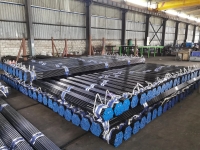
Pipe selection is a critical engineering decision, not just a specification detail.
Different stages require different pipe performance:
Drilling: High torque, tension, fatigue resistance
Production: Pressure containment, corrosion resistance
Transportation: Strength, weldability, cost efficiency
Incorrect oil and gas pipe selection can lead to:
Premature failure
High maintenance costs
Well integrity risks
Upstream pipes are collectively known as OCTG (Oil Country Tubular Goods).
They operate under extreme conditions:
High torque and axial loads
Abrasive drilling environments
High-pressure formations
Functions:
Drill Pipe: Transmits rotation and drilling fluid
Casing Pipe: Stabilizes wellbore
Tubing Pipe: Carries oil and gas to surface
Midstream focuses on line pipe systems.
Design priorities:
Long-distance flow stability
Internal pressure resistance
Weldability and consistency
Standard: API 5L is widely used for oil and gas line pipe.
Downstream pipes operate in complex environments:
High temperature
Corrosive chemicals
Variable pressure
Material selection is critical for long-term stability and safety.
Drill pipe serves two main purposes:
Transmits torque to the drill bit
Circulates drilling fluid
It supports:
Cooling the drill bit
Removing cuttings
Maintaining pressure balance
Load conditions:
Torsion
Tension
Bending (especially in directional drilling)
Key parameters:
Outer Diameter (OD): Affects hydraulics
Weight: Influences load distribution
Steel Grade: Determines strength (E75, X95, G105, S135)
Correct selection prevents:
Buckling
Excessive torque
Connection failure
Typically made from high-strength alloy steel with:
High tensile strength
Fatigue resistance
Wear resistance
For deep wells or corrosive formations, enhanced materials are required.
Casing pipe is a permanent structural component.
Main functions:
Wellbore stabilization
Zonal isolation
Pressure containment
Support for wellhead equipment
Surface Casing Pipe
Protects groundwater
Supports wellhead
Intermediate Casing Pipe
Handles abnormal pressure zones
Stabilizes complex formations
Production Casing Pipe
Extends to reservoir
Supports long-term production
Casing must resist:
Collapse pressure
Internal burst pressure
Axial tension
Corrosion risks include:
CO₂
H₂S
Saline fluids
Solutions:
CRA materials
Protective coatings
Upgraded steel grades
Casing Pipe: Structural, cemented, permanent
Tubing Pipe: Flow conduit, replaceable
Tubing focuses on internal flow conditions, while casing handles external loads.
Tubing must provide:
Pressure resistance
Corrosion resistance
Flow efficiency
Workover durability
In advanced wells:
Erosion resistance
Scale control are also important
Common standard: API 5CT
Selection depends on:
Production rate
Reservoir pressure
Completion design
Seamless Line Pipe
No weld seam
Better pressure resistance
Used in critical systems
Welded Line Pipe (ERW / LSAW)
Cost-effective
Suitable for large diameters
Widely used in pipelines
API 5L defines:
Chemical composition
Mechanical properties
Testing requirements
Common grades:
X42, X52, X65, X70
Higher grades = higher strength.
Used for:
Crude oil pipelines
Natural gas transmission
Refined product transport
Requires coordination of:
Material
Welding
Inspection
|
Pipe Type |
Function |
Location |
Load Type |
Standard |
Service Life |
|
Drill Pipe |
Torque transmission |
Drilling |
Torsion + fatigue |
API 5DP |
Temporary |
|
Casing Pipe |
Well integrity |
Well structure |
Collapse + pressure |
API 5CT |
Permanent |
|
Tubing Pipe |
Fluid transport |
Production |
Internal pressure |
API 5CT |
Replaceable |
|
Line Pipe |
Long-distance transport |
Midstream |
Internal pressure |
API 5L |
Long-term |
High internal pressure → Tubing / Line Pipe
High external pressure → Casing Pipe
Combined loads → Drill Pipe
Corrosive media → Use corrosion-resistant materials
High temperature → Use alloy or upgraded grades
Erosion → Select higher hardness materials
Deep wells → Higher strength casing & drill pipe
Horizontal wells → Fatigue-resistant drill pipe
Long pipelines → Weldable, consistent line pipe
Each oil and gas pipe type serves a distinct engineering role:
Drill Pipe: Drilling performance
Casing Pipe: Well integrity
Tubing Pipe: Production efficiency
Line Pipe: Transportation reliability
Key Insight:
Pipe selection is not standard-based alone—it must match:
Operating conditions
Load requirements
Environmental factors
Working with an experienced supplier helps avoid over-specification or under-design risks.
1. What are the main types of oil and gas pipes?
The main types are drill pipe, casing pipe, tubing pipe, and line pipe, each used at different stages.
2. What is OCTG in oil and gas?
OCTG stands for Oil Country Tubular Goods, including casing, tubing, and drill pipe.
3. What is the difference between casing pipe and tubing pipe?
Casing is structural and permanent, while tubing is removable and used for fluid flow.
4. Which pipe is used for oil and gas transportation?
Line pipe (API 5L) is used for long-distance transportation.
How do you choose the right oil and gas pipe?
Selection depends on pressure, environment, well depth, and application stage.


