


Drill pipe threads are critical mechanical interfaces connecting the drill pipe and drill bit, responsible for transmitting torque, axial load, and impact forces during drilling operations.
Thread quality directly affects drilling efficiency, connection reliability, sealing performance, and the service life of the entire drill string.
In applications such as geological exploration, water well drilling, mining drilling, and engineering drilling, drill pipe threads must withstand long-term high torque, repeated impact, vibration, and abrasive wear, making proper thread selection essential.
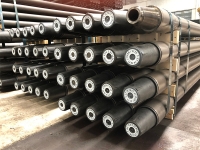
Classification of Geological Drill Pipe Threads
From an industry and standards perspective, geological drill pipe threads are mainly divided into two systems:
1. API Standard Threads (Mainstream & Highly Interchangeable)
Manufactured according to API Spec 5DP and API Spec 7-1, API threads feature:
Global standardization
Excellent interchangeability
Mature manufacturing and inspection systems
They are widely used in:
Oil & gas drilling
Geological exploration
Water well drilling
Mining drilling
2. Non-API Threads (Custom or Industry-Specific)
These threads are typically found in:
Mining drilling tools
Engineering drilling systems
Proprietary factory designs
Advantages:
Optimized for specific working conditions
Limitations:
Poor interchangeability
Higher dependency on original manufacturers
Tooth Profiles of Geological Drill Pipe Threads
Different thread profiles are designed to meet different load, sealing, and operational requirements.
1. Triangular (V-Type) Threads
Triangular tooth profile
Good sealing and self-locking performance
Effective at preventing drilling fluid leakage
Typical applications:
Water-bearing formations and low-to-medium load drilling environments.
2. Trapezoidal Threads
Trapezoidal tooth profile
Strong load-bearing capacity
Capable of transmitting large torque and axial force
Typical applications:
Deep drilling and hard rock formations requiring high power transmission.
3. Rectangular Threads
Rectangular tooth profile
High transmission efficiency
Low friction between mating threads
Typical applications:
Fast drilling operations with frequent make-up and break-out.
Note: Poor self-locking ability—usually requires additional locking measures.
4. Special Thread Types (e.g. Sawtooth Threads)
Combine advantages of trapezoidal and rectangular threads
Excellent unidirectional axial load resistance
Typical applications:
High-load, deep well, and special geological conditions.
Geological Drill Pipe Thread Sizes
1. Thread Outer Diameter (Major Diameter)
The outer diameter (tooth diameter) defines the maximum thread size and is usually equal to or slightly smaller than the drill pipe OD.
Common API sizes:
2-3/8", 2-7/8", 3-1/2", 4", 4-1/2", 5"
2. Thread Pitch (TPI)
Pitch indicates the spacing between adjacent thread teeth and directly affects load capacity and assembly speed.
Common API thread pitches:
4 TPI: Deep engagement, high load capacity
4.5 TPI: Balanced performance
5 / 5.5 TPI: Faster make-up and lighter weight
3. Nominal Diameter (Pitch Diameter)
Also known as the finger diameter, representing the effective load-bearing diameter of the thread.
Common nominal diameters:
2.063", 2.469", 2.875", 3.5", 4"
4. Nominal Length (Thread Length)
Represents the effective engagement length of the threaded connection.
Common API nominal lengths:
2.4", 2.7", 3.1"
Common API Geological Drill Pipe Thread Types
|
Thread Type |
Full Name |
Key Characteristics |
Typical Applications |
|
STC |
Short Thread Coupling |
Short thread, light load |
Conventional geological drilling |
|
LTC |
Long Thread Coupling |
Longer engagement, higher strength |
Mining & oilfield drilling |
|
BTC |
Buttress Thread |
Ultra-high load capacity |
Deep wells, high-pressure drilling |
|
REG |
Regular Thread |
Traditional tapered thread |
Light to medium load |
|
NC |
Numbered Connection |
Digital standardized series |
High-performance drilling |
Causes of Geological Drill Pipe Thread Damage
1. Improper Installation
Misalignment or excessive tightening during make-up can cause:
Thread deformation
Galling
Thread stripping
2. Wear and Abrasion
Long drilling cycles combined with:
Rock cuttings
Drilling mud
Sand and impurities
accelerate thread wear and reduce sealing performance.
3. Material or Manufacturing Defects
Insufficient material strength
Heat treatment defects
Machining inaccuracies
may lead to thread chipping or breakage under high torque.
4. Harsh Geological Conditions
Hard rock layers, complex formations, and strong vibration increase impact loading, significantly shortening thread service life.
Geological Drill Pipe Thread Selection Principles
Select thread type, size, and length based on drilling depth, torque, and geological conditions.
Use API standard threads whenever possible to ensure interchangeability.
Balance pitch and thread length to optimize both load capacity and operational efficiency.
FAQ
Q1: Can API threads and non-API threads be mixed?
A: No. Differences in profile angle, taper, pitch, and tolerance can cause sealing failure, wear, or stripping.
Q2: What are common thread angles for geological drill pipes?
A:
Triangular (V-type): ~60°
Trapezoidal: ~30°
Buttress (BTC): Asymmetrical load-bearing angle
Q3: Is a larger pitch always better?
A: No. Larger pitch allows faster assembly, while smaller pitch provides higher load capacity. Deep and high-torque wells prioritize load-bearing performance.
Summary
Geological drill pipe threads are not just connectors, but core components determining drilling safety, efficiency, and cost control.
Selecting the correct thread standard, profile, size, and pitch significantly reduces risks such as thread stripping, pipe failure, and unplanned downtime, ensuring long-term, stable drilling performance.


