


Thick-walled elbows are pipe elbows manufactured according to international standards such as ASME B16.9, with wall thicknesses reaching Sch160, XXS (double extra strong), or even heavier custom specifications. Compared with standard Sch40 or Sch80 elbows, thick-walled elbows are specifically designed for high-pressure, high-temperature, and highly corrosive piping systems where operational safety and structural reliability are critical.
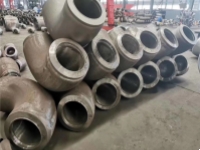
Thick-walled elbows are not simply ordinary elbows with increased thickness. Their design provides several important engineering advantages.
1. High Pressure Resistance
The increased wall thickness significantly improves the elbow’s ability to withstand high-pressure fluids such as:
Supercritical steam
High-pressure oil and gas
Chemical process media
This helps reduce the risk of cracking, deformation, and pipeline failure.
2. Better Corrosion and Wear Resistance
Additional wall thickness creates a larger corrosion and wear allowance.
This is especially important for systems handling:
Corrosive chemicals
Acidic fluids
Slurry media
Sand-containing fluids
Even after long-term erosion or corrosion, the elbow can still maintain sufficient structural strength.
3. Improved High-Temperature Stability
At elevated temperatures, the allowable stress of steel materials decreases.
Thick-walled elbows help compensate for this strength reduction while also improving resistance to:
Thermal expansion stress
Pipeline vibration
Water hammer impact
External mechanical loads
4. Higher Operational Safety
In industries such as oil & gas, petrochemical, thermal power, and nuclear energy, thick-walled elbows are often mandatory under engineering design specifications.
They play a critical role in preventing:
Leakage accidents
Pipeline rupture
Fire and explosion risks
Because of their heavy wall thickness and high mechanical requirements, thick-walled elbows require more advanced manufacturing processes than standard elbows.
Hot Push Forming
Hot push forming is one of the most widely used manufacturing methods.
In this process:
The pipe blank is heated using medium-frequency induction heating
A mandrel pushes and forms the elbow shape
Advantages
High production efficiency
Smooth internal surface
Stable wall thickness
Lower fluid resistance
Hot Press Forming
Hot pressing uses large hydraulic presses and dedicated molds to directly form heated pipe blanks or steel plates.
This process is suitable for:
Large-diameter elbows
Extra-heavy wall thickness
Special custom dimensions
Welded Elbow Manufacturing
For extremely thick or oversized elbows, manufacturers may produce multiple formed sections and weld them together.
This method is commonly used for:
Ultra-heavy wall elbows
Large industrial piping systems
Custom engineering projects
Material selection depends on operating temperature, pressure, and corrosion conditions.
Carbon Steel Elbows
Typical material:
ASTM A234 WPB
Applications
General high-pressure systems
Industrial process pipelines
Steam systems
Stainless Steel Elbows
Common grades:
ASTM A403 WP304 / 304L
ASTM A403 WP316 / 316L
Advantages
Excellent corrosion resistance
Good high-temperature performance
Long service life
Alloy Steel Elbows
Typical grades:
WP5
WP9
WP91
Applications
Power plant boilers
High-temperature steam pipelines
Refinery process systems
Special Alloy Materials
Special service conditions may require:
Duplex stainless steel
Super duplex stainless steel
Nickel-based alloys
Inconel alloys
These materials are used in extremely corrosive or high-temperature environments.
Thick-walled elbows are widely used in critical industrial piping systems.
Oil and Gas Industry
Applications include:
High-pressure gathering pipelines
Refinery process systems
Hydrogenation units
Offshore platforms
Chemical and Petrochemical Industry
Used in:
High-pressure reactors
Chemical processing systems
Ammonia production units
Corrosive media pipelines
Power Generation Industry
Widely used for:
Main steam pipelines
Reheat steam systems
High-pressure feedwater systems
Nuclear power piping
Shipbuilding Industry
Applications include:
Marine steam pipelines
Hydraulic systems
Ship propulsion systems
Heat Exchange Equipment
Thick-walled elbows are also used in:
Shell-and-tube heat exchangers
High-pressure heat transfer systems
Industrial thermal equipment
When selecting thick-walled elbows, several technical parameters must be confirmed.
1. Size Specifications
Important dimensions include:
Nominal diameter (DN / NPS)
Outside diameter (OD)
Center-to-end dimension
Bending radius
Common elbow radius types:
Long radius (1.5D)
Short radius (1.0D)
2. Wall Thickness
Wall thickness directly affects pressure resistance.
Common thickness classifications include:
Sch40
Sch80
Sch160
XXS
Generally, Sch160 and above are considered thick-walled elbows.
3. Material Grade
The elbow material must match the pipeline system requirements.
Examples include:
ASTM A234 WPB
ASTM A403 WP316L
WP91 alloy steel
Material selection depends on:
Temperature
Pressure
Corrosion conditions
Service life requirements
4. Manufacturing Standards
Most thick-walled elbows follow standards such as:
ASME B16.9
These standards define:
Dimensional tolerance
Geometric accuracy
Inspection requirements
Manufacturing quality
5. Connection Type
Most thick-walled elbows use:
Butt weld (BW) connections
Butt welding provides:
High connection strength
Reliable sealing
Better pressure resistance
1. What is considered a thick-walled elbow?
Elbows with Sch160, XXS, or heavier wall thickness are generally considered thick-walled elbows.
2. Why are thick-walled elbows used?
They are used for high-pressure, high-temperature, and corrosive piping systems requiring higher safety and strength.
3. What standards apply to thick-walled elbows?
Common standards include ASME B16.9, ASTM A234, and ASTM A403.
4. What materials are commonly used?
Carbon steel, stainless steel, alloy steel, duplex stainless steel, and nickel alloys are commonly used.
5. What industries use thick-walled elbows?
Oil & gas, petrochemical, power generation, shipbuilding, and heavy industrial systems widely use them.


