


What Is Drill Pipe?
Drill pipe is a critical component of the drill string used in oil and gas drilling operations. It is typically manufactured from high-strength seamless steel pipe with a wall thickness of about 9–11 mm.
The primary functions of drill pipe include:
Transmitting rotary torque from the drilling rig to the drill bit
Circulating drilling fluid down the wellbore
Extending the drill string to gradually deepen the well
Selecting the correct drill pipe size is essential for maintaining drilling efficiency, operational safety, and structural reliability.
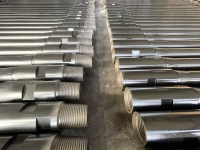
Structure of a Typical Drill Pipe
A standard drill pipe is composed of three main components:
1. Pipe Body (Tube)
The pipe body is the long hollow section of the drill pipe, manufactured from seamless steel tubing. It provides the primary structural strength and fluid passage during drilling.
2. Tool Joints
Tool joints are threaded connections welded to both ends of the pipe body. They allow individual drill pipes to be connected together to form a continuous drill string.
3. Upset Sections
Upset sections are thickened pipe ends designed to reinforce the connection area between the pipe body and tool joints, improving durability under high torque and stress conditions.
Because drill pipes operate under high loads, high pressure, and harsh environments, they are manufactured according to strict API (American Petroleum Institute) standards and metallurgical requirements.
Standard Drill Pipe Size Chart
Drill pipe dimensions are standardized in the oil and gas industry. The most widely used specifications follow API standards, which define key parameters such as:
Outside diameter (OD)
Nominal weight
Tool joint size
Connection type
Below is a typical API drill pipe size chart used in oilfield operations.
|
Drill Pipe Size |
|||||
|
Size |
Nominal Weight |
Calculated Weight Wpe (Lb/ft) |
Grade |
Wall Thickness |
Upset Ends. For Weld-on Tools Joint |
|
2 3/8" |
6.65 |
6.26 |
E、X、G、S |
0.280" |
EU |
|
2 7/8" |
10.4 |
9.72 |
E、X、G、S |
0.362" |
IU or EU |
|
3 1/2" |
9.5 |
8.81 |
E |
0.254" |
IU or EU |
|
3 1/2" |
13.3 |
12.31 |
E、X、G、S |
0.368" |
IU or EU |
|
3 1/2" |
15.5 |
14.63 |
E |
0.449" |
IU or EU |
|
3 1/2" |
15.5 |
14.63 |
E、X、G、S |
0.449" |
EU or IEU |
|
4" |
14 |
12.93 |
E、X、G、S |
0.330" |
IU or EU |
|
4 1/2" |
13.75 |
12.24 |
E |
0.271" |
IU or EU |
|
4 1/2" |
16.6 |
14.98 |
E、X、G、S |
0.337" |
EU or IEU |
|
4 1/2" |
20 |
18.69 |
E、X、G、S |
0.430" |
EU or IEU |
|
5" |
16.25 |
14.87 |
E、X、G、S |
0.296" |
IU |
|
5" |
19.5 |
17.93 |
E |
0.362" |
IEU |
|
5" |
19.5 |
17.93 |
E、X、G、S |
0.362" |
EU or IEU |
|
5" |
25.6 |
24.03 |
E |
0.500" |
IEU |
|
5" |
25.6 |
24.03 |
E、X、G、S |
0.500" |
EU or IEU |
|
5 1/2" |
21.9 |
19.81 |
E、X、G、S |
0.361" |
IEU |
|
5 1/2" |
24.7 |
22.54 |
E、X、G、S |
0.415" |
IEU |
|
6 5/8" |
25.2 |
22.19 |
E、X、G、S |
0.330" |
IEU |
|
6 5/8" |
27.7 |
24.21 |
E、X、G、S |
0.362" |
IEU |
|
Mechanical Properties |
||||||
|
Steel Grade |
Yield Strength |
Tensile Strength > |
||||
|
>Min. |
Max |
Min. |
||||
|
Psi |
Mpa |
Psi |
Mpa |
Psi |
Mpa |
|
|
E-75 |
75,000 |
517 |
105,000 |
724 |
100,000 |
689 |
|
X-95 |
95,000 |
655 |
125,000 |
862 |
105,000 |
724 |
|
G-105 |
105,000 |
724 |
135,000 |
931 |
115,000 |
793 |
|
S-135 |
135,000 |
931 |
165,000 |
1138 |
145,000 |
1000 |
Key Drill Pipe Dimensions Explained
Understanding drill pipe dimensions is essential for selecting the correct pipe for drilling operations.
1. Outside Diameter (OD)
The outside diameter (OD) determines the structural strength and torque transmission capacity of the drill pipe.
It also affects compatibility with other drill string components, including:
drill collars
stabilizers
downhole drilling tools
In most drilling projects, common drill pipe OD sizes range from 2 3/8 inches to 6 5/8 inches.
2. Inside Diameter (ID)
The inside diameter (ID) controls the flow capacity of drilling fluid inside the pipe.
A larger ID allows:
higher drilling fluid circulation rates
efficient removal of rock cuttings
improved drill bit cooling
stable wellbore pressure control
Therefore, selecting an appropriate ID is essential for maintaining efficient drilling fluid circulation.
|
Grade |
Minimum Yield Strength |
|
E75 |
75,000 psi |
|
X95 |
95,000 psi |
|
G105 |
105,000 psi |
|
S135 |
135,000 psi |
Drill Pipe Steel Grades
Drill pipes are manufactured in different strength grades to meet varying drilling depths and operational loads.
Common API drill pipe grades include:
E-75 – suitable for shallow and medium-depth wells
X-95 – used in moderate drilling conditions
G-105 – designed for deeper wells with higher loads
S-135 – high-strength grade for deep and demanding drilling environments
Choosing the correct steel grade ensures the drill pipe can withstand high torque, tension, and cyclic fatigue during drilling operations.
FAQ
1. What is the standard drill pipe size?
Common drill pipe outside diameters range from 2 3/8 in to 6 5/8 in, depending on drilling requirements and well depth.
2. Why is drill pipe made from seamless steel?
Seamless steel pipes provide higher strength, better fatigue resistance, and improved pressure performance, which are essential for demanding drilling operations.
3. What standard governs drill pipe manufacturing?
Most drill pipes are produced according to API Spec 5DP, which defines dimensions, material grades, and testing requirements.
4. What is the difference between OD and ID in drill pipes?
OD (Outside Diameter) affects pipe strength and compatibility with drilling tools.
ID (Inside Diameter) determines drilling fluid flow capacity.
5. What is the strongest drill pipe grade?
Among common API grades, S-135 provides the highest strength and is typically used in deep or high-load drilling environments.


