Drill pipes used in oil and gas drilling are available in a wide range of sizes and specifications. Key parameters include outer diameter (OD), inner diameter (ID), wall thickness, weight per unit length, and pipe length.
In practical applications, standard drill pipe sizes typically range from 2-3/8″ to 6-5/8″, with selection based on well depth, load requirements, and torque demand.
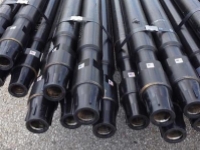
Part 1: Standard Drill Pipe Sizes in Oil Rigs
Drill pipe sizes in oilfield operations are primarily defined by outer diameter (OD) and comply with American Petroleum Institute API 5DP standards. These standards ensure interchangeability and compatibility between drill pipes, tool joints, and other drilling components.
In most drilling scenarios, the commonly used OD range is:
2-3/8″ to 6-5/8″
Common API Drill Pipe Sizes
2-3/8″ drill pipe – suitable for shallow wells and light-duty operations
2-7/8″ drill pipe – widely used in medium-depth wells
3-1/2″ drill pipe – common in directional drilling and standard operations
4″ drill pipe – designed for higher torque in deeper wells
4-1/2″ drill pipe – used in high-load drilling environments
5″ drill pipe – suitable for heavy-duty drilling operations
5-1/2″ drill pipe – applied in deep wells requiring high tensile strength
6-5/8″ drill pipe – used for deep and high-torque drilling projects
Each size varies not only in OD but also in ID, wall thickness, weight per foot, and torque capacity, which directly determine its operational suitability.
Part 2: Classification of Drill Pipe Sizes
Drill pipes can be categorized into small, medium, and large diameters, based on OD and performance characteristics.
(1) Small Diameter Drill Pipe
Typical Size: 2-3/8″
Grade: E-75
Features: Lightweight, easy handling, suitable for low-load drilling
Typical Performance:
Torque: ~15,000 ft-lb
Tensile Strength: ~75,000 psi
(2) Medium Diameter Drill Pipe
Typical Sizes: 2-7/8″, 3-1/2″
Grade: G-105
Features: Balanced strength and weight; most commonly used category
Typical Performance:
Torque: ~30,000–50,000 ft-lb
Tensile Strength: ~105,000 psi
(3) Large Diameter Drill Pipe
Typical Sizes: 4-1/2″, 5-1/2″, 6-5/8″
Grade: S-135
Features: High load-bearing capacity; suitable for deep wells and high-torque operations
Typical Performance:
Torque: ~70,000–120,000 ft-lb
Tensile Strength: ~135,000 psi
Quick Comparison Table
|
Size Category |
Common OD |
Grade |
Weight (lb/ft) |
Torque Capacity |
Well Depth |
Key Feature |
|
Small |
2-3/8″ |
E-75 |
~6.65 |
~15,000 ft-lb |
Shallow |
Lightweight |
|
Medium |
2-7/8″–3-1/2″ |
G-105 |
10.4–13.3 |
30,000–50,000 ft-lb |
Medium |
Most common |
|
Large |
4-1/2″–6-5/8″ |
S-135 |
16.6–25.2 |
70,000–120,000 ft-lb |
Deep |
High strength |
Part 3: Key Factors Affecting Drill Pipe Selection
Selecting the correct drill pipe size involves multiple engineering considerations:
Well Depth
Deeper wells require larger diameters and higher-grade materials to handle increased loads
Pressure Conditions
High-pressure environments demand thicker walls and stronger materials
Temperature
Elevated temperatures require alloy steels with stable mechanical properties
Drilling Type
Directional or horizontal drilling requires enhanced fatigue resistance and torque capacity
Part 4: Drill Pipe Size and Connection Types
Drill pipes are connected using threaded tool joints to ensure reliable torque transmission and structural integrity. Each pipe size is matched with a suitable connection type.
Common Connection Types
IF (Internal Flush)
OD Range: 2-3/8″–2-7/8″
Application: Shallow wells, directional drilling
Feature: Smooth internal flow, moderate torque
REG (Regular)
Application: Standard and deep wells
Feature: High load capacity, easy assembly/disassembly
EU (External Upset)
Application: Small to medium OD pipes
Feature: Reinforced joint for repeated use
API IF
OD Range: 2-7/8″–3-1/2″
Application: High-torque directional wells
Feature: Standardized, reliable performance
Conclusion
Understanding drill pipe sizes and specifications is critical for optimizing drilling efficiency, safety, and cost control. From 2-3/8″ lightweight pipes for shallow wells to 6-5/8″ heavy-duty pipes for deep drilling, proper selection ensures maximum operational performance and equipment longevity.
FAQ
1. What is the standard range of drill pipe sizes?
Typically 2-3/8″ to 6-5/8″ OD, according to API standards.
2. Which drill pipe size is most commonly used?
2-7/8″ and 3-1/2″ are the most widely used sizes.
3. What standard governs drill pipe specifications?
The API 5DP standard issued by the American Petroleum Institute.
4. How are drill pipes classified?
They are classified into small, medium, and large diameters based on OD.
5. What factors affect drill pipe selection?
Key factors include well depth, pressure, temperature, and drilling conditions.