Oil Country Tubular Goods (OCTG) are essential steel products used throughout the lifecycle of oil and gas wells—from drilling and well construction to production and completion. Selecting the right OCTG casing, tubing, or drill pipe is critical for maintaining well integrity, improving operational efficiency, and ensuring long-term safety.
Although these products are all classified as OCTG, they perform very different functions and are manufactured to different standards. This guide explains the differences between casing, tubing, and drill pipe, compares common API steel grades, and provides practical guidance for selecting the appropriate OCTG products.
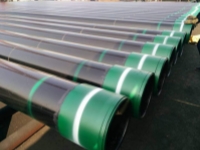
Oil Country Tubular Goods (OCTG) refers to steel tubular products specifically designed for oil and gas exploration and production.
OCTG products are primarily used to:
Support well construction
Isolate formation layers
Transmit drilling power
Transport oil, gas, and drilling fluids
Protect well integrity throughout production
The three primary OCTG products are drill pipe, casing pipe, and tubing.
Each OCTG product performs a unique function within the well.
|
Product |
Primary Function |
Typical Service Conditions |
|
Drill Pipe |
Transfers torque and drilling fluid during drilling |
Torsion, tension, compression, bending |
|
Casing Pipe |
Supports the wellbore and isolates formations |
External pressure, internal pressure, axial load |
|
Tubing |
Transports oil and gas during production |
Internal pressure, corrosion, tensile load |
Together, these products create a complete well system from drilling through production.
Casing is installed in stages as drilling progresses. Each string serves a specific purpose and contributes to overall well integrity.
Common casing types include:
Conductor Casing
Stabilizes the wellhead
Prevents collapse of loose surface formations
Surface Casing
Protects freshwater zones
Supports blowout preventer (BOP) installation
Intermediate Casing
Isolates unstable formations
Controls abnormal formation pressure
Protects salt beds and lost circulation zones
Production Casing
Provides permanent support for production operations
Protects the production tubing throughout the well's service life
Steel grade selection has a direct impact on pressure capacity, corrosion resistance, and well performance.
|
Steel Grade |
Minimum Yield Strength |
Main Characteristics |
Typical Applications |
|
J55 / K55 |
55,000 psi |
Economical and easy to process |
Shallow wells |
|
N80 |
80,000 psi |
Balanced strength and cost |
Medium-depth wells |
|
L80 |
80,000 psi |
Excellent resistance to H₂S environments |
Sour service wells |
|
P110 |
110,000 psi |
High strength for demanding conditions |
Deep and high-pressure wells |
|
Q125 |
125,000 psi |
Ultra-high strength |
Ultra-deep and HPHT wells |
Among these grades, N80 and P110 are widely used because they provide an excellent balance between mechanical performance and cost.
OCTG products are generally distinguished by outside diameter (OD) and intended application.
|
Product |
Typical Outside Diameter |
|
Tubing |
Up to 4-1/2 in (114.3 mm) |
|
Casing |
4-1/2 in (114.3 mm) and above |
|
Drill Pipe |
Approximately 2-3/8 in to 6-5/8 in |
Casing is designed primarily for structural support, while tubing emphasizes production efficiency and drill pipe is engineered for high torsional strength during drilling.
OCTG products are manufactured according to internationally recognized industry standards to ensure quality, compatibility, and safety.
The most common standards include:
API 5CT – Specification for casing and tubing
API 5DP – Specification for drill pipe
API 7-2 – Rotary shoulder threaded connections
ISO 11961 – Technical delivery conditions for steel drill pipe
Depending on project requirements, OCTG products may also be supplied under different Product Specification Levels (PSL), with higher PSL grades requiring more stringent inspection and testing.
Selecting the appropriate OCTG solution requires evaluating several engineering factors, including:
Well depth
Formation pressure
Operating temperature
Corrosive media (H₂S or CO₂)
Required mechanical strength
Thread connection type
Applicable API specifications
Working with an experienced OCTG manufacturer helps ensure proper material selection, strict quality control, complete traceability, and compliance with international standards.
High-quality OCTG products undergo comprehensive inspections throughout manufacturing, including:
Chemical composition analysis
Mechanical property testing
Dimensional inspection
Non-destructive testing (NDT)
Hydrostatic testing
Thread inspection
These quality assurance procedures help improve well integrity, reduce operational risks, and extend service life under challenging field conditions.
Q1: What is the difference between casing and tubing?
Casing supports the wellbore and isolates formations, while tubing transports oil and gas from the reservoir to the surface.
Q2: Which API standard covers OCTG casing and tubing?
API 5CT is the primary international standard for OCTG casing and tubing.
Q3: What are the most commonly used OCTG steel grades?
J55, N80, L80, and P110 are among the most widely used grades for different well conditions.
Q4: How do I choose the correct OCTG steel grade?
Selection depends on well depth, operating pressure, temperature, corrosion conditions, and project design requirements.
Q5: Why is quality control important for OCTG products?
Comprehensive testing ensures mechanical performance, dimensional accuracy, thread integrity, and compliance with API standards, helping maintain well safety and reliability.