Steel pipe dimensions are typically defined by three key parameters:
NPS (Nominal Pipe Size) – the nominal pipe designation
OD (Outside Diameter) – the actual outside diameter
Wall Thickness (SCH) – the pipe wall thickness series
Understanding the relationship between these dimensions helps engineers, buyers, and contractors select the correct pipe for pressure, flow, and structural requirements.
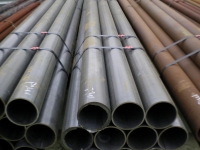
NPS (Nominal Pipe Size) is the standard North American pipe sizing system used to identify pipe dimensions.
Unlike actual measurements, NPS is a designation rather than a physical diameter.
Examples
|
NPS |
Actual OD |
|
NPS 2 |
2.375 in (60.3 mm) |
|
NPS 6 |
6.625 in (168.3 mm) |
|
NPS 12 |
12.75 in (323.9 mm) |
Key Point
NPS is a naming system that standardizes pipe selection and specification across industries.
Outside Diameter (OD) is the actual measured diameter of a pipe from one outer edge to the opposite outer edge.
For a given NPS:
OD remains constant
Wall thickness may change
Inside diameter changes accordingly
This principle applies to:
Seamless steel pipes
ERW pipes
LSAW pipes
SSAW pipes
Schedule (SCH) is a standardized designation used to represent pipe wall thickness.
A higher schedule number indicates:
Thicker wall
Smaller inside diameter
Higher pressure capability
Common schedules include:
SCH 10
SCH 20
SCH 40
SCH 60
SCH 80
SCH 120
SCH 160
Important Note
Modern schedule numbers are dimensional standards and should not be interpreted as direct pressure ratings.
For the same NPS:
|
Dimension |
Changes? |
|
NPS |
No |
|
OD |
No |
|
Wall Thickness |
Yes |
|
Inside Diameter (ID) |
Yes |
As wall thickness increases:
Pressure resistance increases
Flow area decreases
Pipe weight increases
For pipe sizes up to NPS 8:
SCH 80 ≈ XS (Extra Strong)
For NPS 10 and larger:
SCH 80 and XS may differ
Dimensions should always be verified using ASME standards
Therefore, SCH 80 and XS should not automatically be considered interchangeable.
The suffix "S" indicates dimensions specified for stainless steel pipe.
Applicable Standards
|
Pipe Type |
Standard |
|
Carbon Steel Pipe |
ASME B36.10M |
|
Stainless Steel Pipe |
ASME B36.19M |
Although SCH 80 and SCH 80S may share identical dimensions in certain sizes, they are governed by different standards and should be verified before substitution.
For a 6-inch pipe (OD 168.3 mm):
|
Schedule |
Wall Thickness (mm) |
Typical Service |
|
SCH 10 |
3.4 |
Low pressure |
|
SCH 20 |
5.5 |
Medium pressure |
|
SCH 30 |
7.1 |
Moderate pressure |
|
SCH 40 |
9.5 |
Standard industrial service |
|
SCH 80 |
11.0 |
High pressure |
|
SCH 160 |
18.3 |
Severe service |
Higher schedules provide greater pressure-bearing capability but also increase weight and material cost.
Proper understanding of NPS, OD, and wall thickness helps:
Ensure compatibility between pipes and fittings
Select appropriate pressure ratings
Reduce procurement errors
Improve engineering design accuracy
Incorrect size selection can lead to installation problems, flow restrictions, and increaed project costs.
|
Requirement |
Recommendation |
|
General industrial service |
SCH 40 |
|
Higher pressure systems |
SCH 80 |
|
Severe pressure applications |
SCH 160 |
|
Corrosion-resistant systems |
SCH 80S / Stainless Steel |
|
Large-diameter pipelines |
Verify OD and wall thickness separately |
1. What does NPS mean in pipe sizing?
NPS stands for Nominal Pipe Size, a standard designation used to identify pipe dimensions.
2. Is NPS the same as actual diameter?
No. NPS is a nominal size, while OD is the actual outside diameter.
3. Does OD change with schedule?
No. For a given NPS, the outside diameter remains constant.
4. What happens when schedule increases?
Wall thickness increases, inside diameter decreases, and pressure capacity generally improves.
5. Is SCH 80 the same as XS?
For sizes up to NPS 8, they are generally equivalent. For larger sizes, dimensional differences may exist.
Steel pipe sizing is based on the relationship between NPS, OD, and wall thickness. While NPS serves as a standard designation, OD provides the actual outside dimension, and Schedule defines wall thickness. Understanding these parameters is essential for selecting the correct pipe size, pressure class, and application requirement in industrial piping systems.