The allowable temperature range of carbon steel pressure piping is determined by material strength, low-temperature toughness, and high-temperature creep resistance. According to ASME B31.3 and common standards such as ASTM A106 and ASTM A53, carbon steel piping cannot be used indefinitely under extreme temperature conditions.
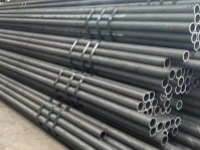
1. High-Temperature Limit of Carbon Steel Pipes
For commonly used materials like ASTM A106 Gr.B and A53 Gr.B, the maximum recommended continuous operating temperature is generally:
425∘C425^\circ C425∘C
Above this temperature, carbon steel may enter the creep region, where the material slowly deforms under long-term stress. Prolonged exposure can also cause graphitization, leading to embrittlement and reduced pressure resistance.
In special short-term operating conditions, ASTM A106 Gr.B may be used up to:
480∘C480^\circ C480∘C
However, strict service-time control and reduced allowable stress are required.
2. Low-Temperature Limit
At low temperatures, ordinary carbon steel gradually loses toughness and becomes brittle.
For standard ASTM A106 Gr.B piping without impact testing, the common minimum service temperature is:
−29∘C-29^\circ C−29∘C
If:
the design temperature is below -29°C, or
the wall thickness exceeds ASME exemption limits,
then Charpy V-notch impact testing (CVN) is required.
3. Recommended Material for Lower Temperatures
For low-temperature environments, engineers often choose ASTM A333 Gr.6, which is specifically designed for cold service conditions down to:
−46∘C-46^\circ C−46∘C
It offers better low-temperature toughness and reduced brittle fracture risk compared to standard carbon steel.
4. Common Carbon Steel Material Comparison
|
Material Grade |
Temperature Range |
Main Application |
|
ASTM A106 Gr.B / A53 Gr.B |
-29°C to 425°C |
General industrial piping |
|
ASTM A106 Gr.B (impact tested) |
-46°C to 425°C |
Special low-temperature service |
|
ASTM A333 Gr.6 |
-46°C to 343°C |
Low-temperature pipelines |
|
API 5L Gr.B |
-20°C to 400°C |
Oil & gas transmission |
5. Material Selection Recommendations
Above 425°C: Use alloy steel such as ASTM A335 P11/P22
Between -29°C and 425°C: ASTM A106 Gr.B is the most economical standard choice
Below -29°C: Consider impact testing or switch to ASTM A333 Gr.6
Conclusion
The safe operating range of carbon steel pressure piping depends on both high-temperature creep resistance and low-temperature toughness. Proper material selection according to ASME standards helps improve pipeline safety, durability, and long-term reliability.
FAQ
Q1: What is the maximum temperature for ASTM A106 Gr.B pipe?
The commonly accepted continuous operating limit is about 425°C.
Q2: Why can carbon steel fail at high temperature?
Because creep deformation and graphitization reduce strength over time.
Q3: What is the minimum safe temperature for standard carbon steel piping?
Typically around -29°C without impact testing.
Q4: Which material is suitable for -46°C service?
ASTM A333 Gr.6 is commonly used for low-temperature applications.
Q5: Can carbon steel pipes be used above 425°C?
Long-term use above 425°C is generally not recommended for ordinary carbon steel.