Tube fabrication services are specialized manufacturing processes used to transform standard steel tubes into customized components for industrial applications. Through precision cutting, bending, welding, machining, and surface treatment, manufacturers can modify tubing products to achieve specific dimensions, shapes, and performance requirements.
Unlike standard stock tubes, fabricated tubes are engineered according to project specifications, allowing better integration into complex systems. These customized solutions are widely used in construction, oil and gas, automotive, machinery, energy, and infrastructure industries.
Professional tube fabrication helps improve:
Dimensional accuracy
Structural performance
Installation efficiency
Product durability
Overall project reliability
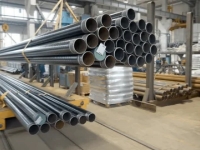
Different fabrication methods are selected according to the material, application requirements, and final product design.
1. Tube Cutting
Tube cutting is the first step in many fabrication projects. It ensures tubes are prepared with accurate lengths and clean edges for further processing.
Common cutting methods include:
|
Cutting Method |
Features |
|
Saw Cutting |
Suitable for general tube processing |
|
Laser Cutting |
High precision and clean cutting edges |
|
Plasma Cutting |
Suitable for thicker tube sections |
|
Abrasive Cutting |
Effective for heavy-duty applications |
Precision cutting reduces material waste and improves assembly accuracy.
2. Tube Bending
Tube bending changes straight tubes into curved shapes while maintaining structural integrity.
Common bending methods include:
Rotary draw bending
Roll bending
Press bending
Mandrel bending
Proper bending technology helps prevent deformation, cracking, and wall thinning.
Typical applications include:
Automotive exhaust systems
Heat exchangers
Hydraulic systems
Structural frameworks
Mechanical equipment
3. Tube Welding
Tube welding is commonly used for joining tube sections or manufacturing customized assemblies.
Common welding processes include:
|
Welding Method |
Application |
|
TIG Welding |
High-quality precision welding |
|
MIG Welding |
Efficient production welding |
|
ERW Welding |
High-volume tube manufacturing |
|
SAW Welding |
Large diameter industrial applications |
Professional welding procedures ensure strong joints while maintaining mechanical performance.
4. Tube End Forming
End forming modifies tube ends to meet specific connection requirements.
Common processes include:
Flaring
Swaging
Expanding
Reducing
Beading
These processes improve connection performance and simplify installation in piping and mechanical systems.
5. Machining and Drilling
Machining processes create customized features such as:
Holes
Grooves
Threads
Connection points
Special profiles
Advanced CNC machining provides accurate dimensions and repeatable production quality for complex tube components.
6. Surface Treatment
Surface finishing improves corrosion resistance, appearance, and service life.
Common surface treatments include:
Galvanizing
Painting
Polishing
Epoxy coating
Sand blasting
The appropriate surface treatment depends on the operating environment and corrosion requirements.
Different industries require different tube materials based on strength, temperature, and corrosion conditions.
|
Material |
Key Characteristics |
Typical Applications |
|
Carbon Steel Tube |
High strength, economical, easy fabrication |
Construction, machinery, structural projects |
|
Stainless Steel Tube |
Excellent corrosion resistance and hygiene performance |
Chemical, food, pharmaceutical industries |
|
Alloy Steel Tube |
Superior strength and heat resistance |
Power plants, high-temperature systems |
Selecting the correct material is essential for achieving long-term performance.
Improved Dimensional Accuracy
Professional fabrication ensures precise control of tube length, diameter, wall thickness, and geometry, reducing installation difficulties.
Customized Engineering Solutions
Fabrication allows manufacturers to produce tubes with special shapes, sizes, and connection designs according to project requirements.
Enhanced Structural Performance
Advanced processing methods help maintain tube strength and improve reliability in demanding applications.
Reduced Project Costs
Outsourcing fabrication to an experienced supplier can reduce machining requirements, minimize waste, and improve production efficiency.
Tube fabrication solutions are widely used across multiple industries.
Construction and Infrastructure
Fabricated tubes are used for:
Steel frameworks
Building supports
Handrails
Structural components
Bridges and infrastructure projects
Oil and Gas Industry
Custom fabricated tubes are applied in:
Pipeline systems
Processing equipment
Energy facilities
Offshore structures
Automotive Manufacturing
Fabricated tubes are commonly used for:
Exhaust systems
Vehicle frames
Hydraulic components
Safety structures
Industrial Equipment
Machinery manufacturers use fabricated tubes for:
Equipment frames
Mechanical assemblies
Fluid transportation systems
Power Generation
Fabricated tubes support:
Boiler systems
Heat exchangers
Thermal equipment
Reliable tube fabrication requires strict inspection throughout the manufacturing process.
Common quality control procedures include:
|
Inspection Method |
Purpose |
|
Dimensional Inspection |
Verify size accuracy |
|
Material Testing |
Confirm chemical composition |
|
Weld Inspection |
Ensure weld reliability |
|
Surface Inspection |
Check finishing quality |
|
Mechanical Testing |
Verify strength performance |
|
Non-Destructive Testing |
Detect internal defects |
These inspection procedures help ensure fabricated tubes meet international standards and customer specifications.
Selecting the right fabrication partner is important for project success. Key factors include:
Manufacturing Experience
Experienced manufacturers understand different materials, fabrication challenges, and industrial requirements.
Advanced Production Equipment
Modern cutting, bending, welding, and machining equipment improves accuracy and production efficiency.
Quality Management System
Reliable suppliers implement strict inspection procedures to ensure consistent product quality.
Customization Capability
A professional supplier should provide flexible solutions for different sizes, materials, and application requirements.
Technical Support
Strong engineering support helps customers optimize designs and select suitable fabrication processes.
United Steel Industry provides professional tube fabrication services for customers requiring customized steel tube solutions.
With advanced processing capabilities and strict quality control systems, the company supports various fabrication requirements, including cutting, bending, welding, machining, and surface treatment.
By combining quality materials, precise manufacturing processes, and technical expertise, United Steel Industry delivers reliable fabricated tube products for construction, energy, industrial, and engineering applications worldwide.
1. What are tube fabrication services?
Tube fabrication services are processes used to modify steel tubes through cutting, bending, welding, machining, and finishing to meet specific project requirements.
2. What are the main tube fabrication methods?
Common methods include tube cutting, bending, welding, end forming, machining, drilling, and surface treatment.
3. What materials can be used for tube fabrication?
Common materials include carbon steel, stainless steel, and alloy steel. Material selection depends on strength, corrosion resistance, and operating conditions.
4. Why choose custom fabricated tubes?
Custom fabricated tubes provide better dimensional accuracy, improved installation efficiency, and solutions designed specifically for complex industrial applications.