Preventing oil casing corrosion is critical to maintaining well integrity, extending service life, and reducing workover and replacement costs. Effective corrosion control focuses on water quality management, annular protection, mechanical damage prevention, bacterial control, and proper timing of protection technologies. Here is an overview of how to prevent oil casing from corrosion.
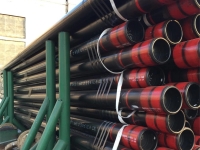
Main Corrosion Prevention Measures for Oil Casing
1. Strict Control of Injection Water Quality
Water quality is one of the primary factors affecting oil casing corrosion.
Key measures include:
Separate injection systems for clean water and contaminated water
Strengthened cleaning of main water pipelines
Ensuring that surface facilities and bottom-hole water quality meet standards
These steps reduce the introduction of corrosive agents into the casing annulus.
2. Use of Annular Protective Fluids
For newly commissioned injection wells:
Annular protective fluids are applied mainly for sterilization and corrosion inhibition
A regular replenishment system should be established to maintain effectiveness
This method helps suppress microbial activity and slows down electrochemical corrosion.
3. Reduction of Mechanical Abrasion
Mechanical wear significantly accelerates oil casing corrosion, especially in deviated wells.
Recommended practices:
Install rubber rings on tubing couplings
Use centralizers in sections with severe well deviation
These measures prevent tubing from scratching or continuously contacting one side of the casing during operation and water injection.
4. Control of Bacterial Corrosion (SRB)
Under-deposit bacterial corrosion, particularly caused by sulfate-reducing bacteria (SRB), is a major risk.
For high-temperature wells where SRB growth is slow and difficult to control:
Periodically inject high-temperature water or steam (~100 °C) into the annulus
This method effectively kills SRB beneath scale layers
5. Cautious Use of Cathodic Protection and Coated Casing
Before internal corrosion in injection wells is effectively controlled:
Cathodic protection and coated oil casing are not recommended
Premature application may reduce effectiveness or introduce secondary risks
Key Operational Points in Oil Casing Corrosion Prevention
1. Water Quality Verification Before Use
When oil casing is used for water transportation:
Ensure water quality meets standards before injection
Implement separate cleaning and discharge procedures
Thoroughly clean the main water pipeline
Ensure the casing is brought to a zero-corrosion baseline condition before use
2. Routine Addition of Annular Protective Fluid
For wells already in operation:
Annular protective fluid should be added during regular production
Periodic replenishment should be standardized to ensure long-term casing protection
3. Minimizing Mechanical Damage During Operation
Mechanical scratches compromise the casing’s corrosion resistance.
To reduce damage:
Install rubber rings on tubing couplings
Avoid direct metal-to-metal contact between tubing and casing
This significantly slows corrosion initiation and propagation.
Oil Casing Corrosion Causes vs Solutions
|
Corrosion Cause |
Description |
Recommended Solution |
|
Poor Injection Water Quality |
Corrosive ions, oxygen, and bacteria enter the annulus through unqualified water |
Separate clean/contaminated water injection and strict water quality control |
|
Bacterial Corrosion (SRB) |
Sulfate-reducing bacteria cause under-deposit and localized corrosion |
Annular protective fluids and periodic high-temperature water or steam injection |
|
Mechanical Abrasion |
Tubing scratches damage casing surface and protective layers |
Install rubber rings on tubing couplings and use centralizers in deviated wells |
|
Under-Scale Corrosion |
Scale deposits trap corrosive media beneath the surface |
Regular cleaning combined with thermal or chemical bacterial control |
|
Improper Protection Timing |
Premature use of coatings or cathodic protection reduces effectiveness |
Apply cathodic protection only after internal corrosion is controlled |
Summary
Oil casing corrosion prevention requires a systematic approach combining:
Water quality control
Annular chemical protection
Mechanical wear mitigation
Targeted bacterial treatment
Proper sequencing of protection technologies
By addressing corrosion sources at both the chemical and mechanical levels, operators can significantly extend oil casing service life and ensure long-term well safety and reliability.
FAQ
Q1: What is the most effective way to prevent oil casing corrosion?
The most effective approach is strict injection water quality control combined with annular protective fluids and mechanical wear prevention.
Q2: Why does poor water quality accelerate oil casing corrosion?
Poor water quality introduces corrosive ions, oxygen, and bacteria into the annulus, accelerating electrochemical and microbial corrosion.
Q3: How can mechanical wear increase oil casing corrosion?
Mechanical scratches damage the protective surface of the casing, creating initiation points for localized corrosion.
Q4: Can bacterial corrosion of oil casing be controlled at high temperatures?
Yes, periodic injection of high-temperature water or steam can effectively kill sulfate-reducing bacteria under scale layers.
Q5: Is cathodic protection always suitable for oil casing corrosion prevention?
No, cathodic protection should only be applied after internal casing corrosion is under control to avoid reduced effectiveness.