J55, K55, N80, L80, and P110 are standard OCTG casing pipe grades defined by API 5CT.
They differ mainly in yield strength, corrosion resistance, and application scenarios:
J55/K55 → shallow, low-pressure wells (cost-effective)
N80 → medium-depth wells (balanced performance)
L80 → corrosive environments (H₂S resistant)
P110 → deep, high-pressure wells (high strength)
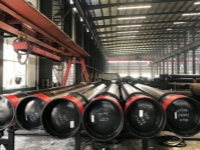
OCTG casing pipe refers to steel pipes used to:
Support wellbore structure
Prevent formation collapse
Isolate pressure zones
Protect groundwater
They are essential in oil & gas drilling and production systems, typically manufactured under API standards.
|
Grade |
Strength Level |
Corrosion Resistance |
Typical Use |
|
J55 |
Low |
Low |
Shallow wells |
|
K55 |
Low (higher tensile than J55) |
Low |
Medium-depth wells |
|
N80 |
Medium |
Moderate |
Deeper wells |
|
L80 |
Medium |
High (H₂S resistant) |
Sour service wells |
|
P110 |
High |
Moderate |
HPHT / deep wells |
Definition: Entry-level OCTG grades with similar yield strength but different tensile strength.
Key Features:
Yield strength: 379–552 MPa
K55 has higher tensile strength than J55
Best For:
Shallow wells
Low-pressure, non-corrosive environments
Definition: Medium-strength casing grade for general oilfield use.
Key Features:
Yield strength: ~80,000 psi
Includes N80-1 and N80-Q (quenched & tempered)
Best For:
Medium to deep wells
Higher pressure conditions
Definition: Corrosion-resistant casing designed for sour service.
Key Features:
مقاresistance to H₂S environments
Variants: L80-1, 9Cr, 13Cr
Best For:
Offshore drilling
Sour gas wells
Definition: High-strength casing for demanding drilling conditions.
Key Features:
Yield strength: up to 965 MPa
High load-bearing capacity
Best For:
Deep wells
High-pressure, high-temperature (HPHT) environments
Shallow → J55 / K55
Medium → N80
Deep / HPHT → P110
H₂S present → L80 or alloy grades
Budget-sensitive → J55 / K55
Performance-critical → N80 / L80 / P110
Must meet API 5CT + project specifications
Q1: What is the most commonly used OCTG casing grade?
N80 is widely used due to its balance of strength and cost.
Q2: Which casing grade is best for corrosive wells?
L80 is recommended for H₂S (sour service) environments.
Q3: Is P110 stronger than N80?
Yes. P110 has significantly higher yield and tensile strength.
Q4: Are J55 and K55 interchangeable?
They are similar, but K55 has higher tensile strength.
Q5: What standard defines OCTG casing pipes?
API 5CT is the primary specification.