Steel gas pipe is one of the most widely used piping solutions for the safe and efficient transportation of natural gas, propane, LPG, and various industrial gases. As global energy infrastructure continues to expand, steel pipes remain the preferred choice for gas distribution networks due to their exceptional strength, pressure resistance, durability, and long service life.
Manufactured from carbon steel, galvanized steel, stainless steel, or alloy steel, steel gas pipes are designed to operate under demanding conditions while maintaining structural integrity and operational reliability. Their robust construction makes them suitable for residential gas supply systems, industrial facilities, power plants, petrochemical projects, and large-scale energy infrastructure.
Compared with many alternative piping materials, steel gas pipes offer superior mechanical performance, excellent impact resistance, and higher pressure-bearing capacity. They can be installed both above ground and underground, with various protective coatings available to enhance corrosion resistance and extend service life in challenging environments.
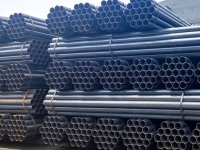
|
Property |
Description |
|
Material |
Carbon Steel, Galvanized Steel, Stainless Steel, Alloy Steel |
|
Manufacturing Method |
Seamless or Welded |
|
Surface Finish |
Black, Galvanized, FBE, 3LPE, 3LPP |
|
Application |
Gas Transmission and Distribution |
|
Pressure Performance |
Suitable for Low, Medium, and High Pressure Systems |
|
Industry Standards |
ASTM, API, ISO, EN |
For harsh operating environments, additional protection systems such as hot-dip galvanizing, Fusion Bonded Epoxy (FBE), 3LPE, or 3LPP coatings can significantly improve corrosion resistance and service life.
High Strength and Pressure Resistance
Steel gas pipes are capable of handling demanding pressure conditions while maintaining dimensional stability and structural integrity. This makes them suitable for both distribution networks and transmission pipelines.
Long Service Life
When combined with proper corrosion protection, steel gas pipes can provide decades of reliable service with minimal maintenance requirements.
Excellent Safety Performance
Steel's mechanical strength helps resist external impacts, ground movement, and operational stresses, contributing to safer pipeline operation.
Flexible Installation Options
Steel gas pipes can be connected using:
Welding
Threaded connections
Grooved fittings
Mechanical couplings
This flexibility allows engineers to adapt installations to different project requirements.
Wide Material Availability
Depending on operating conditions, steel gas pipes can be supplied in:
ASTM A53 Grade B
ASTM A106 Grade B
API 5L Line Pipe Grades
Stainless Steel 304/316
Various alloy steel grades
Quality Control and Testing
To ensure reliability and compliance with international standards, steel gas pipes typically undergo:
Hydrostatic pressure testing
Ultrasonic testing (UT)
Eddy current testing (ECT)
Dimensional inspection
Mechanical property testing
Visual surface inspection
These quality control procedures help verify product performance before delivery and installation.
Gas transportation systems require a high level of operational safety and reliability. Low-quality piping can lead to increased maintenance costs, downtime, and safety risks. High-quality steel gas pipes help operators achieve:
Improved system efficiency
Enhanced operational safety
Reduced maintenance expenses
Extended service life
Lower total lifecycle costs
For energy companies, contractors, and infrastructure developers, selecting the appropriate steel gas pipe is a critical step in ensuring long-term project success.
|
Coating Type |
Main Benefit |
|
Hot-Dip Galvanized |
Excellent atmospheric corrosion resistance |
|
FBE Coating |
Strong adhesion and chemical resistance |
|
3LPE Coating |
Superior underground corrosion protection |
|
3LPP Coating |
High-temperature and mechanical protection |
|
Black Painted |
Basic storage and transportation protection |
1. What is a steel gas pipe used for?
Steel gas pipes are used to transport natural gas, LPG, propane, and industrial gases in residential, commercial, and industrial systems.
2. What materials are commonly used for steel gas pipes?
Common materials include carbon steel, galvanized steel, stainless steel, and alloy steel.
3. Can steel gas pipes be installed underground?
Yes. With proper anti-corrosion coatings such as FBE or 3LPE, steel gas pipes are widely used in underground pipeline systems.
4. How are steel gas pipes tested?
They are typically tested through hydrostatic testing, non-destructive inspection, dimensional verification, and mechanical property testing.