In industrial sectors such as petrochemical, power generation, and construction, flange fittings are critical connection components in piping systems. Their quality directly impacts system safety, sealing performance, and long-term stability.
To ensure product integrity, strict control is required across packaging, transportation, labeling, and acceptance inspection.
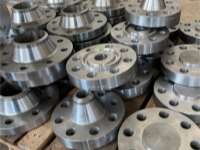
According to standards such as GB/T 29168.2-2024, flange packaging must be designed based on size, material, and application.
Small flanges (DN < 200):
Packed in wooden crates
Internal protection using foam, bubble wrap, or soft padding
Large flanges (DN≥200):
Pallet packaging or steel frame support
Sealing surfaces must be protected with anti-scratch covers
Carbon steel flanges:
Anti-rust oil or anti-corrosion coating required
Stainless steel flanges:
Oiled protection + sealed packaging to prevent oxidation
Moisture-proof
Dust-proof
Shock-resistant
Sealing faces and machined surfaces must be protected to avoid deformation or damage during transit.
Each flange must include clear and traceable identification:
Product name, specification, and standard
Material grade and heat number
Quantity and weight
Production date
Manufacturer information
Project traceability code
Marking must be clearly stamped on the outer cylindrical surface for visibility and traceability.
Transportation is a high-risk stage for damage and must be strictly controlled.
Short-distance: road transport with vibration control
Long-distance: rail or sea freight recommended
High-pressure or precision flanges: transported separately
Clean and inspected transport vehicles
Proper spacing between goods
Use straps, clamps, or wooden supports for fixation
Rainproof and dustproof covering required
Avoid moisture exposure and corrosion risk
Stainless steel flanges require dry, ventilated storage conditions
Avoid sudden braking, sharp turns, or violent vibration during transport
Flange fittings must be inspected in batches (same specification, material, and standard).
Each batch must include:
Certificate of Conformity
Material test certificate (MTC)
Chemical composition report
Mechanical performance report
Non-destructive testing report (if required)
All documents must match physical products one-to-one.
Count based on contract quantity
Verify:
DN size
PN pressure rating
Sealing face type
Check manufacturer marking and color coding
Ensure markings are clear, consistent, and tamper-free
Key inspection items include:
Surface quality (no cracks, forging defects, or corrosion)
Machining quality (no burrs, scratches, or deformation)
Sealing face integrity (no dents or deep scratches)
Coating condition (no unauthorized painting or masking)
Sampling rate: 2%–3% per batch (minimum 2 pieces)
Material Sampling Requirements
Stainless steel / alloy steel / special materials:≥5% sampling (min. 2 pcs)
Carbon steel: may be exempt depending on contract
Non-Destructive Testing (NDT)
Applicable methods:
MT (Magnetic Particle Testing)
PT (Penetrant Testing)
Used for:
Welded flanges
Alloy and stainless steel components
Critical Service Reinforcement
For pipelines involving:
High pressure
High temperature
Oxygen-rich or hydrogen service
Inspection scope and sampling rate must be increased.
ASME B16.5
ISO 7005
EN 1092-1
GB/T 9112-2010
JB/T 74-2015
HG/T 20592-2009
SH/T 3406-2013
Outer diameter tolerance:±1.5 mm
Bolt hole tolerance: +0.5 mm
Flatness tolerance:≤0.1 mm / 100 mm
Spectrometer analysis required
Verify chemical composition matches MTC
If packaging is damaged:
Expand inspection scope
Focus on sealing surface and threads
Re-test affected components
Coordinate Measuring Machine (CMM)–dimensional accuracy
Surface Roughness Tester (Ra≤6.3μm typical requirement)
Ultrasonic Flaw Detector–internal defect detection
Hydrostatic Pressure Test System–sealing and pressure validation
Modern flange logistics is evolving toward:
Recyclable materials
Biodegradable protective fillers
Reduced packaging waste
QR code labeling system
Full lifecycle tracking
Instant access to production and test data
The packaging and shipment of flange fittings is a multi-stage quality control system, involving:
Standardized packaging
Strict transportation management
Traceable labeling system
Multi-level inspection and testing
Only through strict compliance with international standards and controlled logistics processes can flange fittings ensure pipeline safety, sealing reliability, and long-term operational stability.
Q1: How are flange fittings packaged?
A: Usually in wooden cases or pallets with anti-rust oil and protective wrapping.
Q2: Why is protection needed during shipping?
A: To prevent corrosion, scratches, and sealing face damage.
Q3: How are flanges secured in transport?
A: Straps, clamps, and fixed supports are used to avoid movement and impact.
Q4: What is checked upon arrival?
A: Quantity, dimensions, surface condition, and quality certificates.